
Lower bills. Efficient buildings. A steadier grid.
Cantabile connects what a building already has – solar roof, battery, heat pump, wallbox, meters – plans it every 15 minutes around prices, weather and the people who live there, and shares local solar power between tenants and neighbours. One platform from the device to the market.
Pilot phase. Cantabile runs end to end on a pilot home and on a simulated fleet of 98 homes and buildings with real German weather and real 2026 tariffs. Tenant power and the local market are calculated and shown, not yet billed.
Use more of your own sun, buy power when it is cheap, and keep the grid in balance
Every device does its job at the best moment – within the comfort and limits that residents, owners and the grid operator set.
Lower bills
Heating, hot water, battery and car charging move into sunny and cheap hours. Tenants can buy power from their own roof for less than from their supplier.
Efficient buildings
Heating follows the residents' schedules, presence and the weather forecast, room by room. The building's own solar power is used on site instead of being sold off cheaply.
A steadier grid
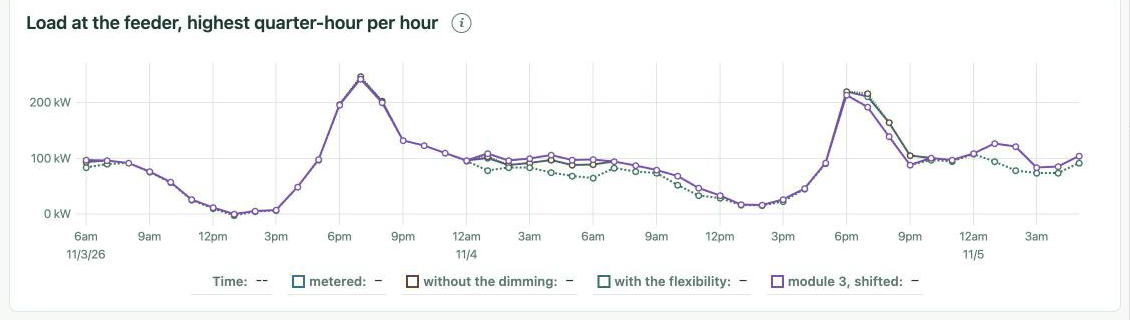
Peaks are shaved at the connection, orders of the grid operator (§14a EnWG) are followed at once, and flexibility becomes visible to those who plan the grid.
A greener future
More solar power is used where it is made, and demand follows the sun and the wind. That is the energy transition, one quarter-hour at a time.
From the device to the market, in five steps
Each step works on its own: if the internet is down, the building keeps running on its last plan.
Devices
PV, battery, heat pump, wallbox, meters, thermostats – existing ones through Home Assistant, new ones from our own hardware line.
Hub or add-on
The Cantabile Hub with its own operating system – or our add-on for an existing Home Assistant.
Edge Agent
Plans the next 48 hours every 15 minutes and switches the devices through a safety guard, on site.
Cloud platform
Forecasts, tariffs, buildings and communities, updates and support – for every role its own workspace.
Market
Tenant power, energy sharing, suppliers and grid operators: prices and limits flow back to every box.
Read more: the platform · how the optimisation works · security and privacy
One controller per home, coordinated up to the neighbourhood
Safety-critical control never leaves the home. The tiers above add forecasts, plans and prices.
Home or flat
Home Assistant reads the sensors and drives thermostats, heat pump, battery and charger. The Edge Agent plans heating, hot water, battery and charging around schedules, tariffs and the sun.
Building
A coordinator shares the roof's solar power and the battery between flats, keeps the connection under its limit and prices tenant power – Mieterstrom or GGV.
Neighbourhood
Communities share power across the public grid (Energy Sharing, §42c EnWG), and a local market settles contracts between homes, buildings and suppliers.
What Cantabile does
The stack
Hardware, the Hub OS with signed A/B updates, the Edge Agent beside Home Assistant, and the cloud platform.
The platformOptimisation
Forecasts, the 15-minute planner, the safety guard, local fallback – and models that learn from each site.
How it plansTariffs and costs
Day-ahead prices, grid fees with §14a time windows, levies and fixed charges – composed per quarter-hour and sent to every box.
Tariffs and costsTenant power
Mieterstrom (§42a), GGV (§42b) and Energy Sharing (§42c): offers, price bands, the cap, and what owners and tenants gain.
Tenant powerFlexibility and grid
Load shaving for homes, buildings, communities, suppliers and grid operators – and §14a orders followed, never invented.
FlexibilityTrust
Consent per purpose, local first, signed updates and open standards: Home Assistant, Matter, Zigbee, Thread, Modbus, EEBUS.
TrustThe roof's power for the people under it
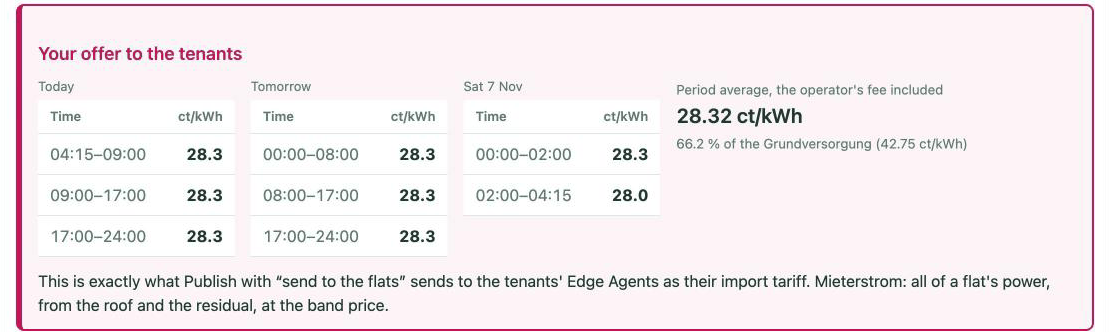
A solar roof on an apartment building usually sells its surplus for a feed-in tariff of a few cents. Sold to the tenants, the same kilowatt-hour is worth close to a retail price – and the tenants still pay less than to their supplier.
- One optimisation sets the tenants' prices and runs the building's battery together.
- Each tenant's price follows their own alternative and stays below it.
- The offer goes straight into the tenants' boxes, so their devices move use into the sunny hours.
- 1Solar roof of the building
- 2Flats: tenant power at their own offer
- 3Building battery, charged only from the roof
- 4Grid connection: residual supply and feed-in
- 5Neighbours across the public grid (§42c)
Already running – on a simulated fleet
Screenshots from the Cantabile console, with the simulated homes and buildings of our test fleet.
Built for everyone around the meter
Building owners and housing companies
Tenant power, efficient heating, investment views for battery and PV.
Stadtwerke and suppliers
Tariffs straight into the boxes, residual supply, Energy Sharing partnerships.
Grid operators
§14a orders followed and shown, feeder load against limits, sealed meters.
Installers
One box for all brands, a guided setup, buildings to join, remote help.
Homeowners and tenants
Comfort first, lower bills, your data under your control.
Looking for pilot partners
Housing companies, Stadtwerke, grid operators and installers who want to try Cantabile on real buildings: let's talk.